

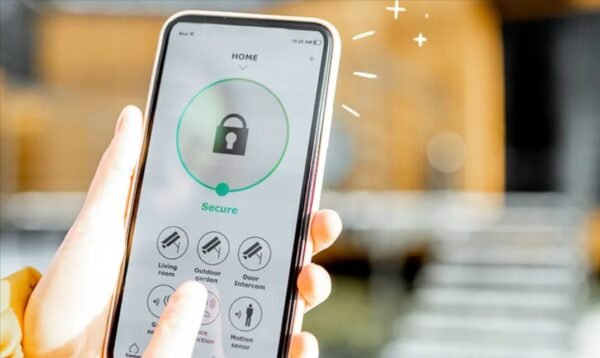
If you live in the city or suburbia, you have access to the infrastructure necessary for electronic home security. Even small towns and villages tend to support monitored home security equipped with devices like wireless cameras and motion sensors. But what if you live in a remote area? What if you own an off-the-grid vacation property – like a remote hunting cabin?
Electronic home security remains elusive for off-the-grid properties. But even remote properties connected to the grid might not be good candidates for modern home security without access to high-speed internet. The reality of the modern security landscape is that the entire thing is powered by internet connections and remote data servers.
How a Typical System Works
Vivint Home Security is a nationwide leader in home security and automation systems. They say a typical system works with a combination of local and internet-based strategies. From a local perspective, all the devices in a system are connected to a central hub through a home’s Wi-Fi network.
If a system is monitored, whether it is by a company like Vivint or the homeowner himself, the internet comes into play. Signals are sent by the system to a remote monitoring center or the homeowner’s phone by way of the internet. Even when a homeowner relies on cellular signals, they are still using their data plan to access the internet.
None of this matters to city and suburban homeowners who take high-speed internet for granted. It is now as universal as water and electric service. To find a modern city or suburban home without high-speed internet is pretty difficult.
Rural America, Not So Much
While most of us take high-speed internet for granted, a 2023 FCC report stated that more than 7 million Americans still did not have access to it. Their numbers included an estimated 18% of all U.S. farms. The fact is that large swaths of rural America still do not have broadband. Some rural consumers have no internet at all, while others depend on expensive satellite service or incredibly slow DSL.
This makes an enormous difference in terms of protecting one’s home with electronic home security. Without internet access, a home security system can only act as a noise-maker. But what good is a loud alarm if there is no one around to hear it?
If a rural property owner is lucky enough to have cell service around his property, an electronic security system could still send alerts to his smartphone. At least he would know there was a problem at his property. But beyond that, cellular service is not an adequate substitute for broadband, at least for monitoring purposes.
Using a Data Plan Doesn’t Work
When I first began looking into home security technologies for off-the-grid properties, I just assumed that using my phone’s data plan would do the trick. It wasn’t until I read a CNet post from 2025 that I realized how impractical that is.
A modern cell phone does not need a Wi-Fi network to access the internet. The phone’s data plan will suffice. In addition, most modern phones can also be used as hotspots. But imagine connecting a home security system to the internet through a smartphone.
Again, the system could easily send alerts if an alarm were triggered. But forget about live video feeds. A phone’s data plan is insufficient for around-the-clock video streaming. Between latency and the amount of bandwidth 24/7 monitoring would consume, a property owner would go broke relying on his data plan.
Using Remote-Only Devices
The previously mentioned CNet post was essentially a review of security devices considered ideal for off-the-grid properties. Nearly all of them are designed to be used locally. For example, one of the devices was a camera that recorded video and stored it locally. A typical setup would involve connecting system to a computer where video footage could be stored.
Video storage is great for after-the-fact viewing. Stored video data can be reviewed by police investigators trying to hunt down a burglar. But local storage is not a deterrent. If a burglar knows that a rural property does not have access to broadband, he also knows that the video surveillance cameras keeping an eye on him are not much of a threat.
Another device mentioned in the post was a video camera powered by solar energy. That is actually a great idea regardless of where a home is located. Solar-powered cameras continue working even when the power goes out. Even so, they are not much help as a deterrent at a property not hooked up to the internet.
None of this is to say that rural property owners should avoid home security systems. Rather, it’s to say that the security cameras and the other devices in a system do not offer as much deterrent value if a property’s rural location isn’t well suited to around-the-clock monitoring.
Prevention Can Be Accomplished in Other Ways
The main appeal of electronic home security is prevention through deterrence. Burglars who know their activities are being monitored by security systems hooked up to the internet need to be concerned about getting caught. That is enough to deter all but the most hardened criminals. But in rural areas, things are different.
The good news is that rural property owners can prevent burglary in other ways. The secret is really no mystery at all: make things as hard as possible on burglars, and they are less likely to put forth the effort.
Making things hard is all about securing a property with defenses that are difficult to breach quickly. This brings to mind things like security gates, heavy-duty deadbolt locks, heavy-duty window locks, block glass for basement windows, steel doors, and so on.
Electronic home security remains fleeting for off-the-grid properties. But there is no blame to lay here. It is a simple reality of modern home security and its reliance on grid power and the internet. Rural property owners cannot rely on electric home security the way their city and suburban counterparts can.